


‘We lost our mission’
LITTLE ROCK, ARK. — The vision for ReMission started small.…

|
Getting your Trinity Audio player ready...
|
Recent years have witnessed a surge of insightful new works on the history of Churches of Christ, including several aimed at a general readership within the fellowship. This trend reflects an increasing appreciation of the need for historical consciousness on a rapidly changing religious landscape.
Just as significantly, these kinds of books have been accompanied by others which engage in historical study not simply to understand where we have been, whether for good or for ill, but also to guide our path going forward.
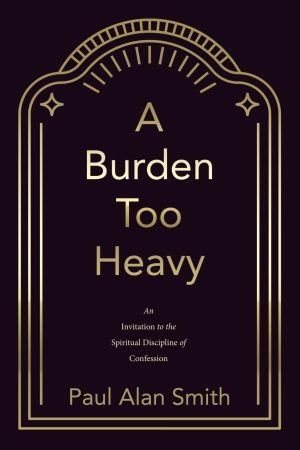
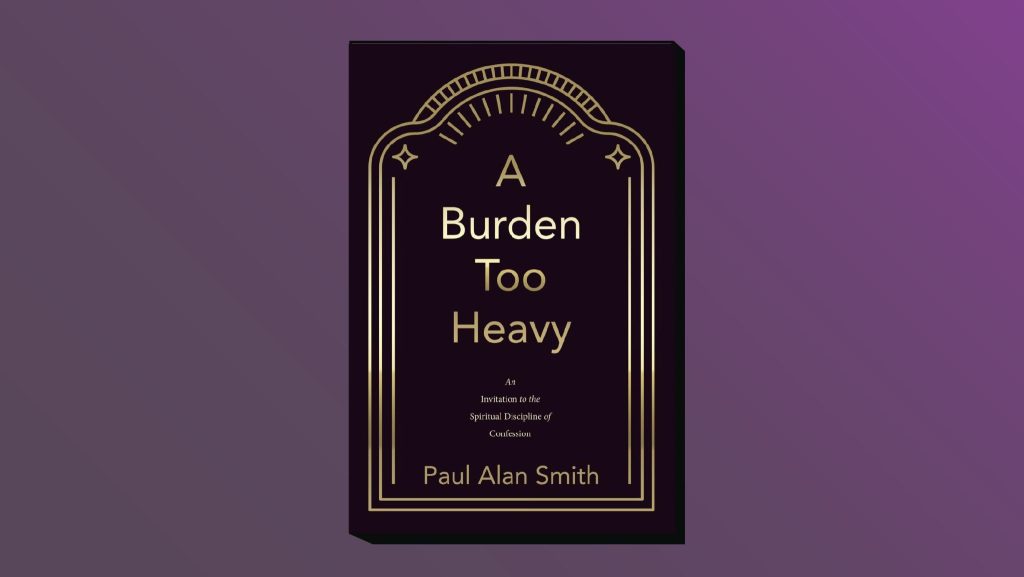
Paul Alan Smith. “A Burden Too Heavy: An Invitation to the Spiritual Discipline of Confession.” WestBow Press. 2025. 190 pages. $16.99.
In this vein, Jack Reese’s “At the Blue Hole: Elegy for a Church on the Edge” and, to a more specific end, Wes Crawford’s “Courage in the Sheer Silence: Challenging Racism in 20th-Century Churches of Christ,” offer historically informative and spiritually formative lessons from the past for our use in the present.
Still other studies go even deeper into the past, considering how Churches of Christ fit into the overall Christian story and what we might be able to glean from it. Notable here is Leonard Allen’s “In the Great Stream: Imagining Churches of Christ in the Christian Tradition.”
Paul Alan Smith’s “A Burden Too Heavy: An Invitation to the Spiritual Discipline of Confession,” a revision of his Fuller Theological Seminary dissertation, follows in this same trajectory. Smith, a minister and lifelong member of Churches of Christ, offers biblically minded readers no fewer than four Scriptural applications of confession.
Three of these are positive in nature, meaning that participants claim and affirm that which they confess: their faith in God, their beliefs about him and their trust in his faithfulness during seasons of lament and struggle.
Related: ‘We lost our mission’
A fourth biblical application, the confession of sin, is negative in that Christians acknowledge sin’s presence in order to seek forgiveness for it. (A fifth type of confession, Smith adds, is the use of formal creeds or statements of faith in certain Christian traditions.)
The second and third sections of “A Burden Too Heavy” are aimed at a general Christian audience. Part two overviews the biblical and historical evidence for confession in the Christian faith and includes a timely case study on German Confessing Church leader Dietrich Bonhoeffer.
Having demonstrated the biblical warrant for the discipline, Smith turns his attention in part three to its effects, exploring confession’s blessings for individual Christians and church communities alike.
It is part one, however, where Smith makes his most direct appeal to readers within Churches of Christ. Across two chapters, he briefly overviews the history of our movement and its implications for our practice — or lack thereof — of confession.
Although there are some relevant, recent works missing from Smith’s bibliography, his overall interpretation of our backstory is convincing and his invitation to join him in confession compelling.
A discussion guide rounds out this volume and makes an already accessible work even more useful. Recommended for those who, as Smith puts it, “recognize that restoration necessarily demands an attachment to the past” as well as “a continual process of self-evaluation and growth.”
JOHN YOUNG is a professor in the Turner School of Theology and Curriculum and assessment coordinator at Amridge University.
As an Amazon Associate, we earn money from qualifying purchases made through the links on this page.
LITTLE ROCK, ARK. — The vision for ReMission started small.…


ROANOKE RAPIDS, N.C. — Softly and tenderly, Jesus called this sinner…


If you are looking for a book of hope during…


Churches of Christ struggle to express our place in Christian…


The editors of “The Living Pulpit: Sermons that Illustrate Preaching…


ABILENE, TEXAS — One theme in my recently published book,…
Your donation helps us not only keep our quality of journalism high, but helps us continue to reach more people in the Churches of Christ community.