Oklahoma elder workshop equips shepherds from three states
The elders of the Mannford Church of Christ in Oklahoma…

|
Getting your Trinity Audio player ready...
|
The model for plural church leadership finds its origin in our holy, triune God, who exists in perfect relationship.
From the beginning, he has invited us into that divine relationship — calling us to serve and lead within the context of the local church. Throughout Scripture and history, God has consistently worked through communities of people, each contributing unique strengths, weaknesses, stories and personalities to his unfolding mission.

Retiring minister Leonardo Gilbert and fellow elders of the Sheldon Heights Church of Christ in Chicago pray for the new senior minister, Justin M. Carter, earlier this year.
In that spirit, elders are not meant to function as solo performers. They are shepherds and catalysts — guiding God’s people toward a Spirit-led, shared vision. This vision rarely originates from the top down; it is shaped through prayerful discernment and the collective wisdom of God’s people, united in their desire to advance his kingdom.
Plural leadership — especially among elder teams — is inherently complex. It requires time, trust and intentionality. But when grounded in the right values, it becomes not only functional but deeply fruitful. Below are five values that distinguish high-functioning elder teams in today’s church:
1. Teamwork over individualism
In healthy elder teams, the mission of the church and the needs of the body take precedence over any one leader’s preferences or platform. These teams are characterized by mutual respect, open communication and a shared commitment to the whole. Joy, not just obligation, becomes the sustaining force for serving together.
Related: Oklahoma elder workshop equips shepherds from three states
2. Trust as the cornerstone
Trust is the foundation upon which healthy leadership is built. It is earned gradually through integrity, humility and consistency — and it can be lost quickly through poor judgment or ethical compromise. Elders must actively cultivate trust by creating a culture where difficult conversations are welcomed, confidentiality is honored and accountability is mutual and loving.
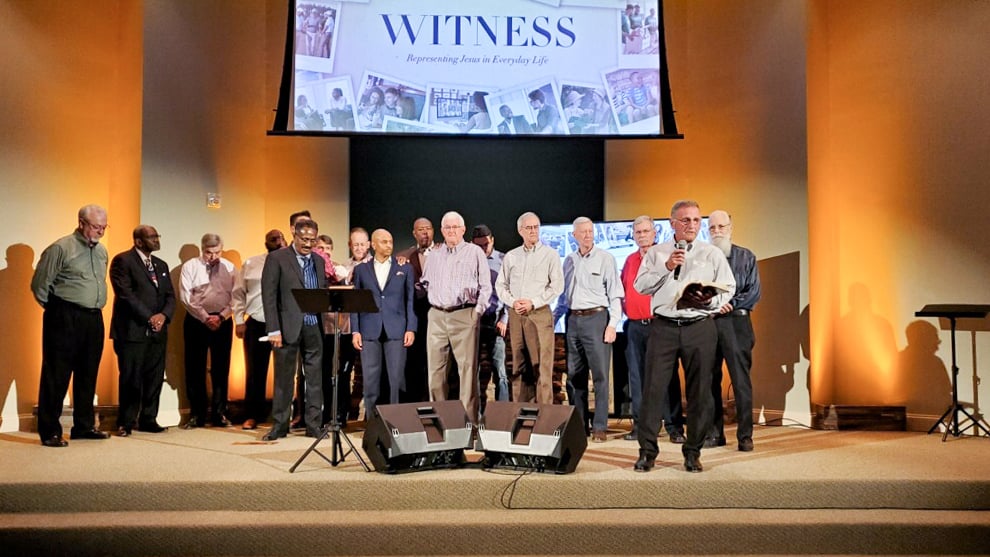
Richard Crowder, an elder of the Grace Chapel Church of Christ in Cumming, Ga., speaks before leading a special prayer at a racial unity service in 2022. Elders from Crowder’s congregation and the Bouldercrest Church of Christ in Atlanta gathered on stage.
3. Humility and a posture of service
Jesus redefined greatness with a towel and basin. He taught his disciples that leadership is not about status but service. Effective elder teams reflect this heart — using influence not to dominate, but to empower; not to be seen, but to bless. Servant-hearted leadership fosters unity and models the way of Christ. In a church heritage that has often prized theological precision, we must not lose sight of the spirit of 1 Peter 5:5: “God resists the proud but gives grace to the humble.”
4. A high view of God’s word and his activity
At their best, elders serve as spiritual discerners. They continually ask, “What has God revealed in His Word? What is the Spirit doing among us?” And they seek to align the church’s direction accordingly. This requires time in Scripture, space for prayer and a posture of listening. The aim is not merely to make good decisions, but to make God-honoring ones — decisions shaped by the eternal rather than the expedient.

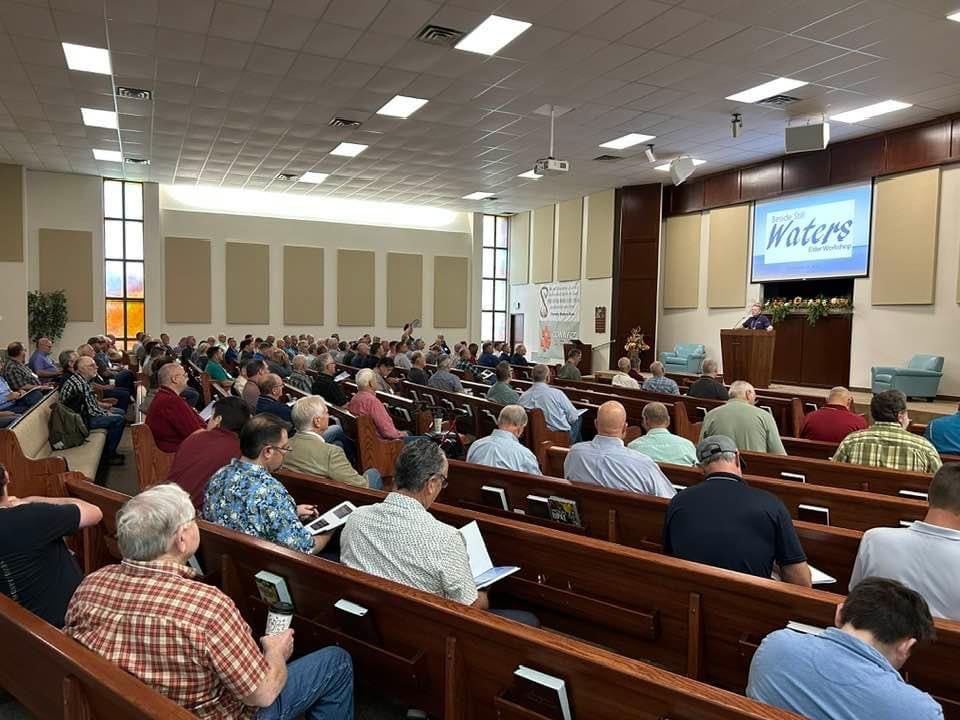
A group of elders at the “Beside Still Waters” workshop hosted by the Mannford Church of Christ in Oklahoma in 2023 enjoy a meal together.
5. Cultural interpretation and awareness
Elders lead not only spiritually, but contextually. Anchored in an authoritative view of Scripture, they must read the cultural moment and understand the local church’s environment with clarity and care. When leaders disregard context, they risk irrelevance — or unnecessary division. But when they interpret well — both within the church and in the broader community — they serve as bridges of wisdom and transformation.
“Within every local church, elder teams have the opportunity to join in the ongoing work of God’s Spirit — shaping a future that reflects his character and carries his hope to the next generation.”
High-functioning elder teams don’t form by accident. They are forged through prayer, humility, intentional relationships and a shared commitment to God’s mission. Leadership in the kingdom is a sacred trust — a calling that invites us to empower, equip and release others into lives of mission.
Within every local church, elder teams have the opportunity to join in the ongoing work of God’s Spirit — shaping a future that reflects his character and carries his hope to the next generation.
JASON THOMPSON serves as executive minister for the Harpeth Hills Church of Christ and has consulted with more than 70 churches and faith-based organizations with ties to Churches of Christ.
The elders of the Mannford Church of Christ in Oklahoma…

COLLEGE PARK, Md. — Nearly 200 leaders and members of…

This month ministers and leaders of Latino ministries discuss the…

DALLAS — The church doctors are in. Actually, Jon Mullican…

‘We have practiced what we teach.” That’s Rick Arrington’s motto…

Phil Robertson, who gained national fame as the bearded, camouflage-clad…
Your donation helps us not only keep our quality of journalism high, but helps us continue to reach more people in the Churches of Christ community.